
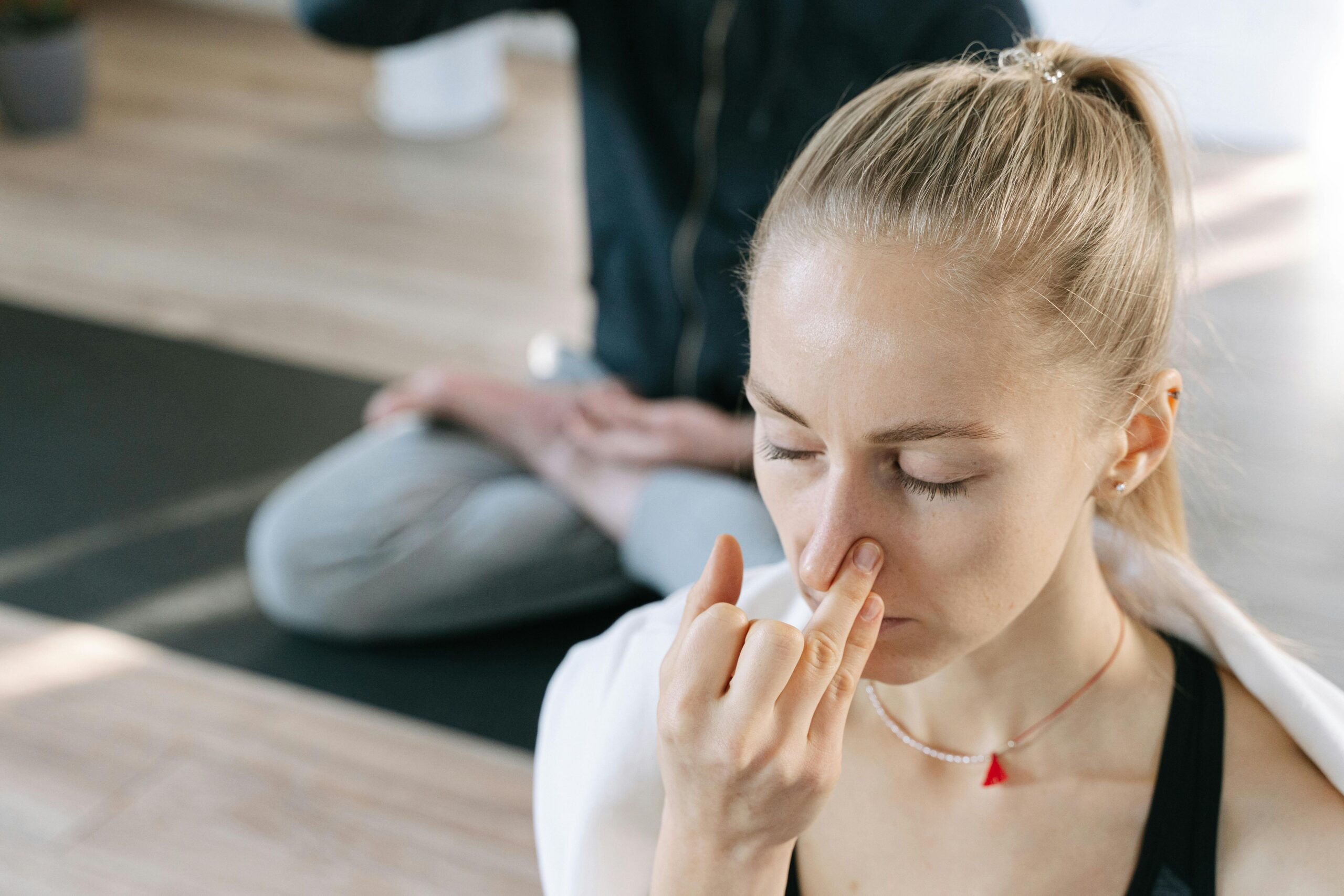
So easy, yet so difficult.
We live in a world of perpetual motion. Notifications ping, deadlines loom, to-do lists grow longer, and somehow the hours slip by before we’ve had a moment to simply be. In this relentless rush, there is one thing we do, every single second of every single day, that holds the power to bring us back to ourselves: we breathe.
Yet, here’s the paradox. The one thing that is always with us is the one thing we almost never pay attention to.
Are We Really Breathing?
Yes, technically, we are all breathing. The body takes care of that on autopilot. But there’s a vast difference between breathing to survive and breathing to thrive.
Most of us spend our days in shallow, chest-level breaths, short, quick, and barely enough to fully oxygenate the body. This kind of breathing keeps us in a low-grade state of stress, tightening the chest, tensing the shoulders, and signaling to the nervous system that there is danger nearby. Our bodies don’t know the difference between a looming deadline and a predator. Stress is stress. And our breath reflects it.
Take a moment right now. Notice your breath. Is it shallow? Is it held? Are your shoulders creeping up toward your ears?
That’s the reality for most of us, and it matters more than we think.
Why Breathing Properly Changes Everything
The breath is one of the very few functions in the body that is both automatic and under our conscious control. This makes it a unique bridge between the body and the mind, between the unconscious and the conscious, between stress and calm.
When we breathe deeply and intentionally, we activate the parasympathetic nervous system, the body’s natural “rest and restore” mode. Heart rate slows. Cortisol drops. The mind clears. Even a few conscious breaths can shift the entire quality of a moment.
Beyond stress relief, proper breathing improves oxygen delivery to every cell in the body, supports better sleep, enhances focus and mental clarity, boosts immunity, and even aids in digestion. The breath is not just air moving in and out; it is life force, moving through you.
Pranayama: The Ancient Science of Breath
The ancient yogic tradition understood this long before modern science caught up. In Sanskrit, prana means life force or vital energy, and ayama means expansion or control. Together, Pranayama is the practice of consciously expanding and directing the breath and, through it, the very energy that animates us.
Far more than a breathing exercise, Pranayama is a complete system of practices that has been refined over thousands of years. Some techniques calm the mind and reduce anxiety. Others build heat, energy, and focus. Some balance the left and right hemispheres of the brain. Others purify the respiratory system and unlock deeper states of meditation.
A few foundational Pranayama practices to explore:
- Nadi Shodhana (Alternate Nostril Breathing): A deeply balancing practice that harmonizes the two sides of the nervous system, clears mental fog, and prepares the mind for meditation. Perfect for moments of overwhelm or before sleep.
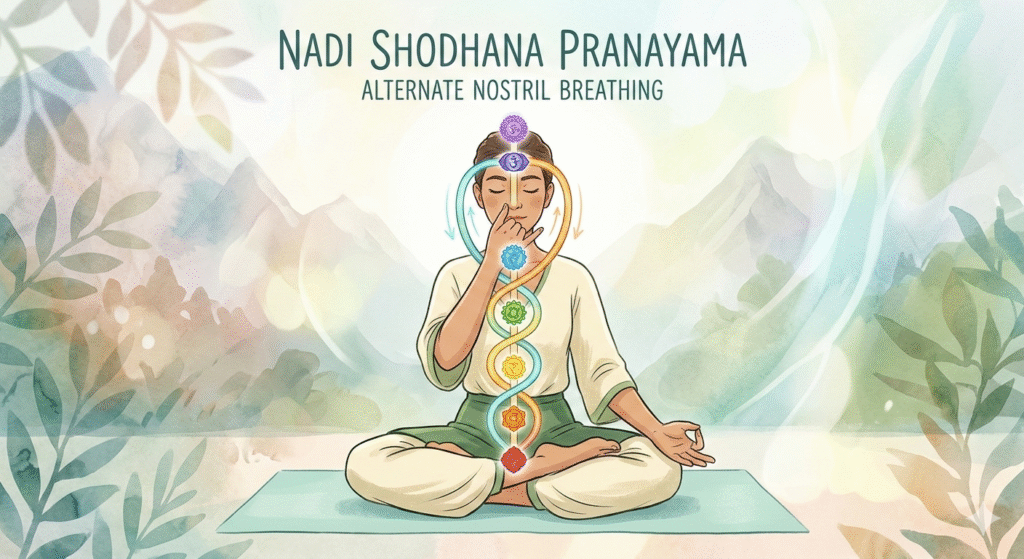
When to be cautious:
- Avoid if you have a blocked or congested nose — forcing breath through one nostril can strain the nasal passages.
- Those with severe asthma or acute respiratory infections should wait until symptoms ease.
- If you feel dizziness or lightheadedness, return to natural breathing immediately and build up duration gradually.
2. Ujjayi (Victorious Breath): Often called the “ocean breath,” this technique involves a gentle constriction at the back of the throat, creating a soft, rhythmic sound. It builds internal heat, anchors attention, and is commonly used during yoga practice.
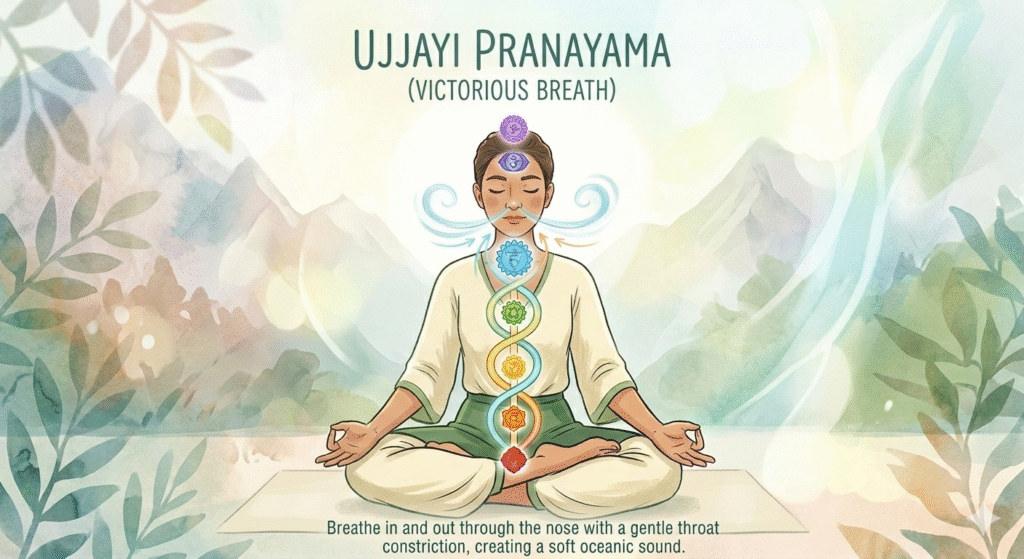
When to be cautious:
- Avoid during fever or in very hot environments, as Ujjayi generates internal heat and can overheat the body.
- Those with low blood pressure should be careful, as extended exhales can sometimes cause dizziness.
- People with throat infections, chronic laryngitis, or thyroid conditions affecting the throat should consult a doctor before practicing.
- Beginners should keep the throat constriction soft and effortless — the sound should never be strained or forced.
3. Bhramari (Humming Bee Breath): A powerful practice for calming anxiety and quieting mental chatter. By humming on the exhale, you create a vibrational effect that soothes the nervous system almost instantly.
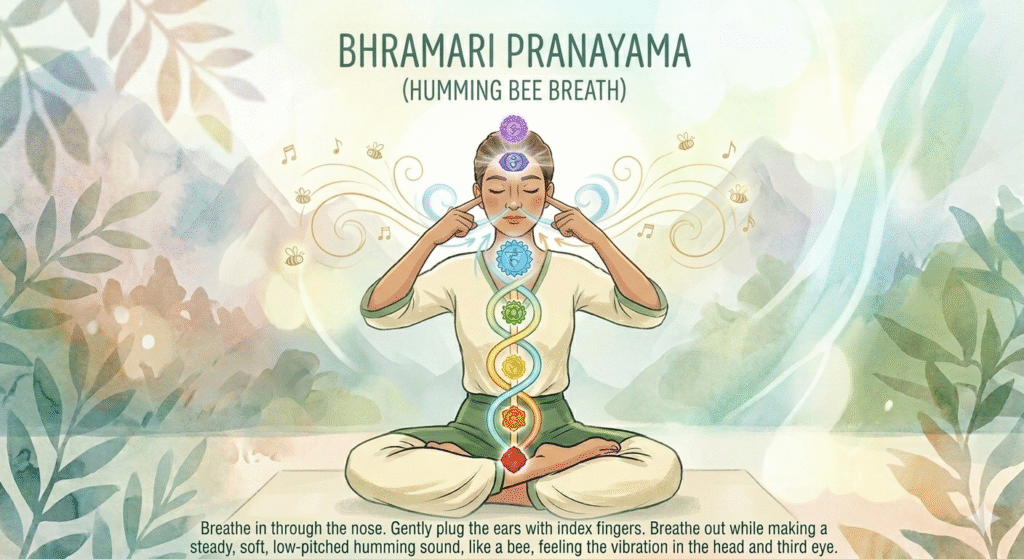
When to be cautious:
- Always practice sitting upright, never lying down, as this restricts the vibration from moving freely.
- Avoid if you have active ear infections, tinnitus, or perforated eardrums, as the internal vibration can aggravate these conditions.
- Best practiced on an empty stomach.
- Pregnant women should keep the practice gentle and avoid any breath retention.
4. Kapalabhati (Skull-Shining Breath): An energizing, cleansing practice involving rapid, forceful exhales. It clears the mind, invigorates the body, and is said to purify the respiratory tract.
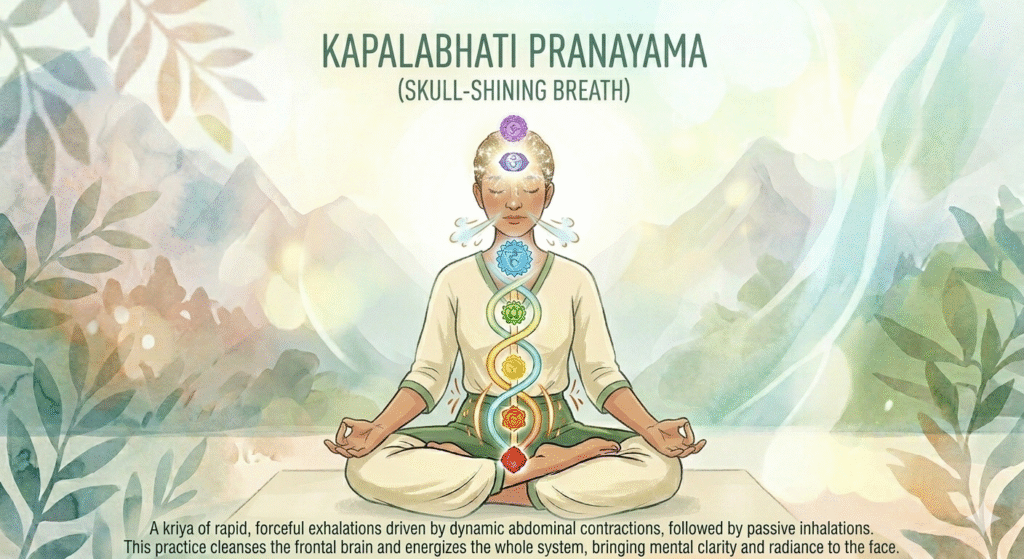
When to be cautious:
- Avoid during pregnancy, menstruation, or after abdominal surgery, as the forceful contractions place significant pressure on the core and pelvic floor.
- Not suitable for those with high blood pressure, heart disease, epilepsy, hernia, or a history of stroke without guidance from a trained teacher and medical professional.
- Those with acid reflux or ulcers should avoid it, as the abdominal pumping can worsen symptoms.
- Never practice when you feel unwell, fatigued, or in the middle of an anxiety attack; save it for when your energy is calm and stable.
Coming Back to Yourself
You don’t need a yoga mat or a meditation cushion to begin. You just need a moment and a willingness to pause.
The next time you feel overwhelmed, scattered, or simply exhausted, try this: Sit quietly, close your eyes, and take one long, slow breath in through the nose. Let the belly expand first, then the ribcage, then the chest. Hold gently at the top. Then exhale slowly, fully, completely, releasing everything you don’t need.
Do this three times. Notice what shifts.
That is the power of the breath. It asks nothing of you but your attention. And in return, it offers you everything: clarity, calm, presence, and a quiet reconnection to the life pulsing through you right now.
In a world that never seems to stop, the breath is your invitation to come home.
Breathe deeply. Be here. Everything else can wait.
Leave a Reply